









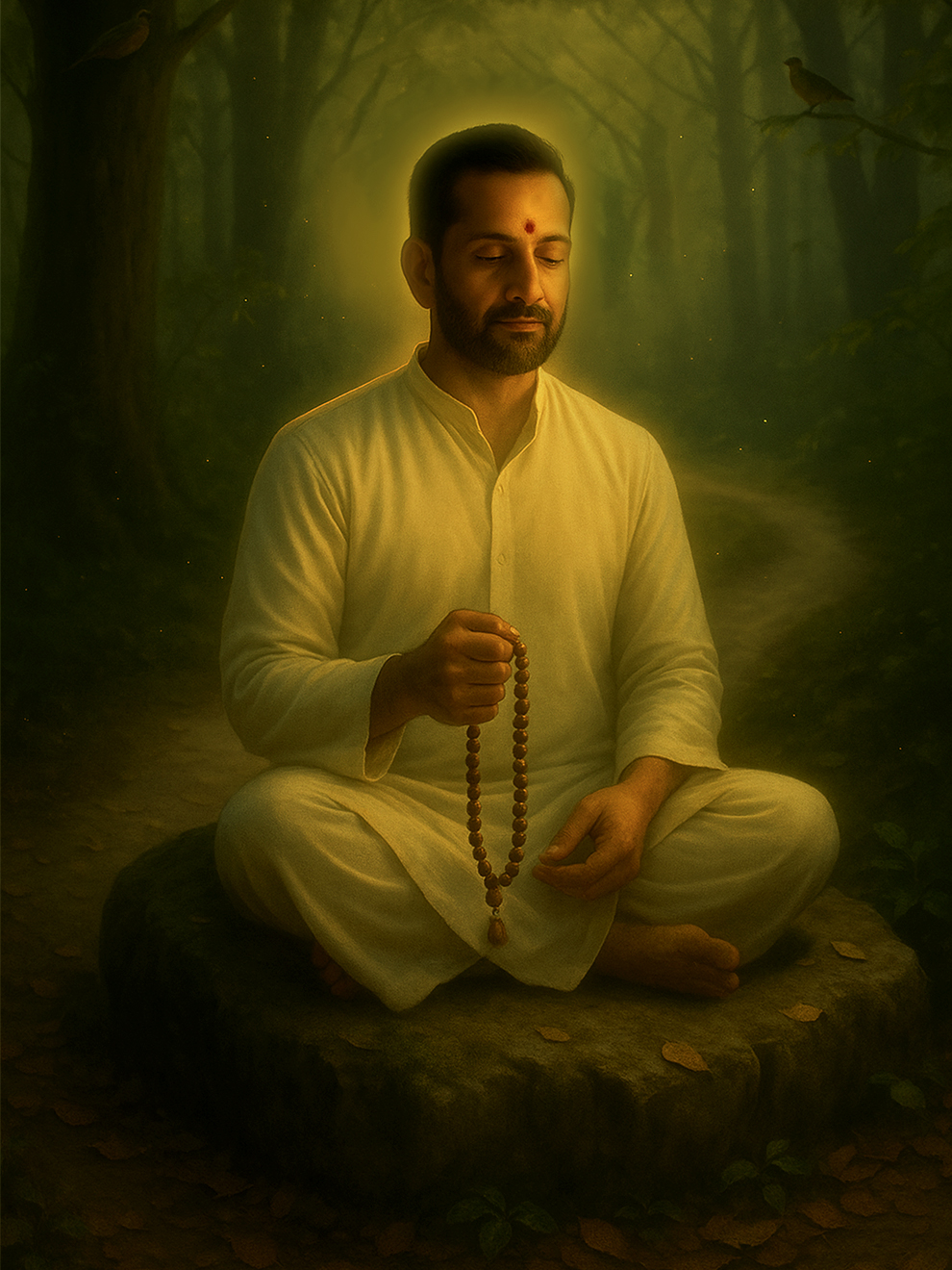
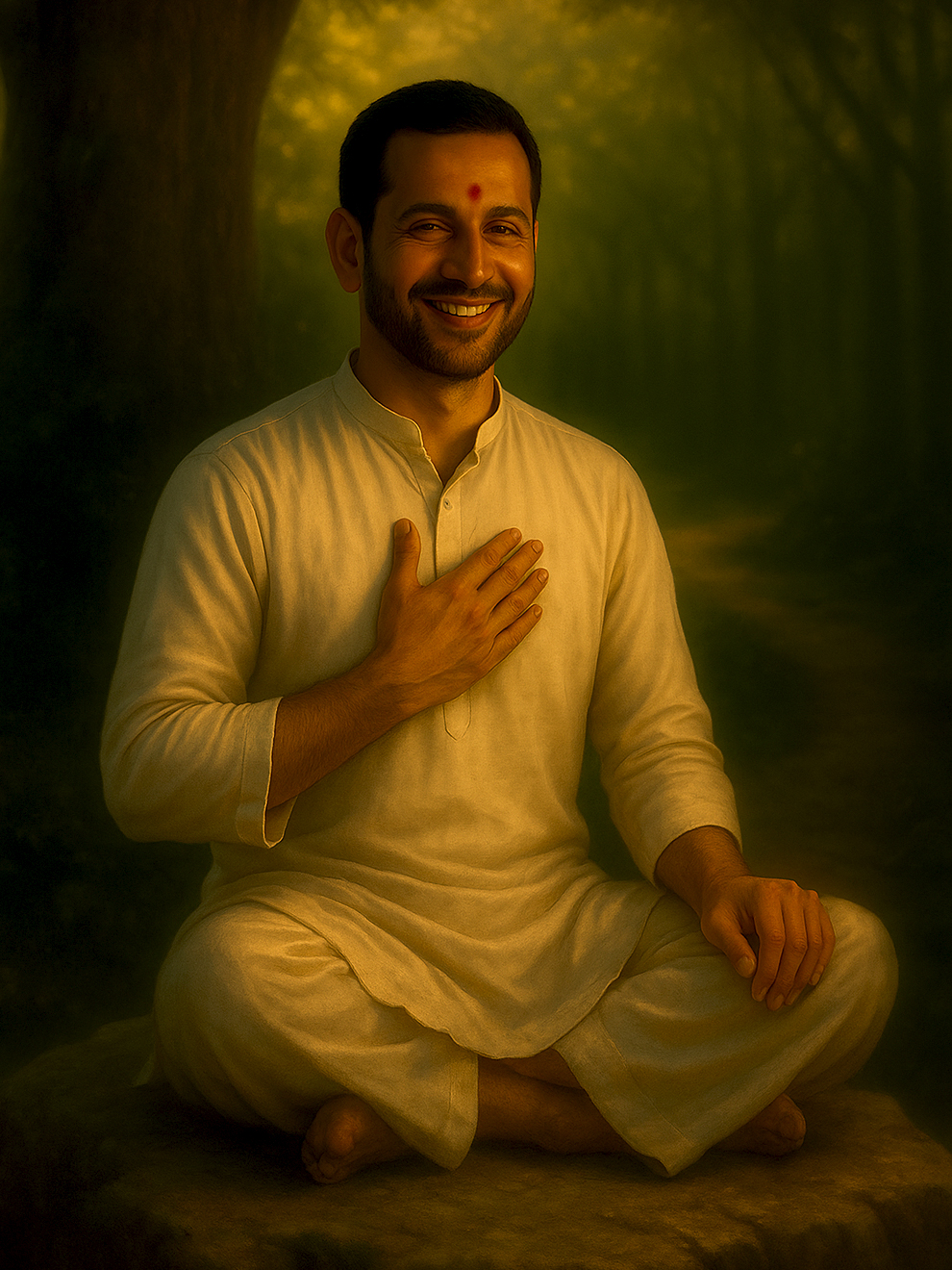
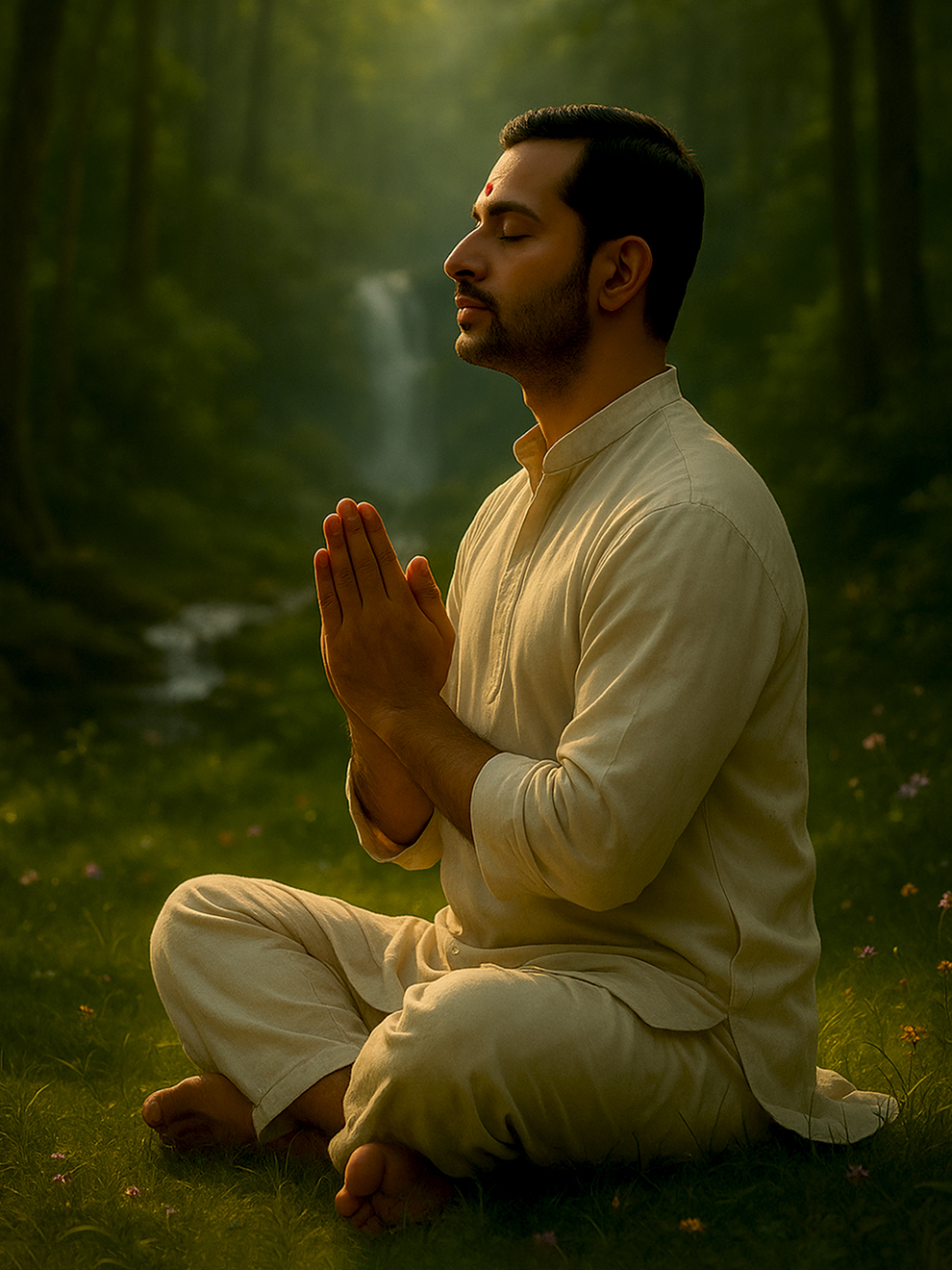
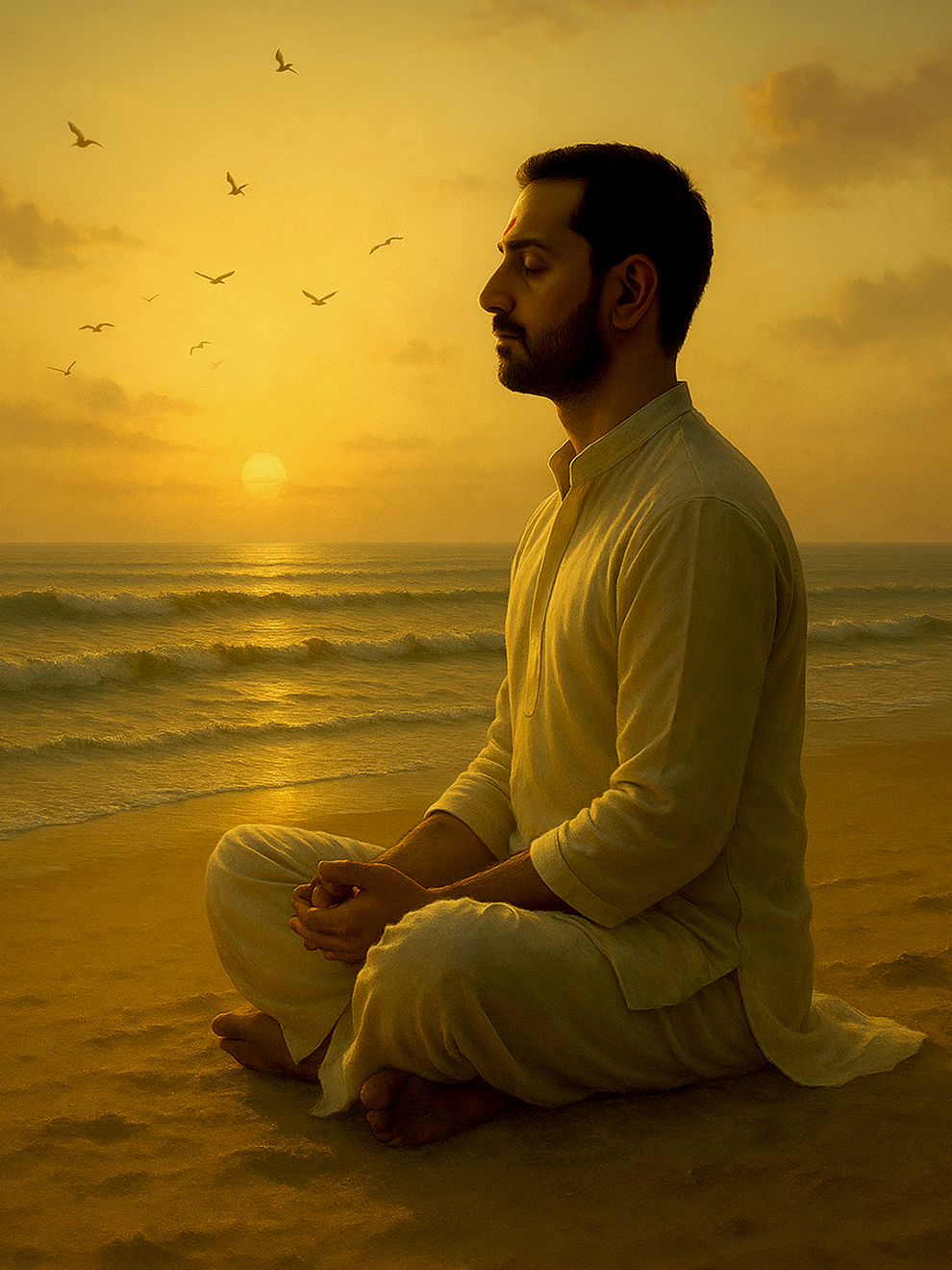
- Posture of sitting:
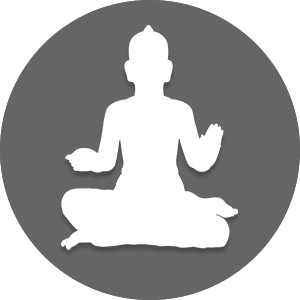
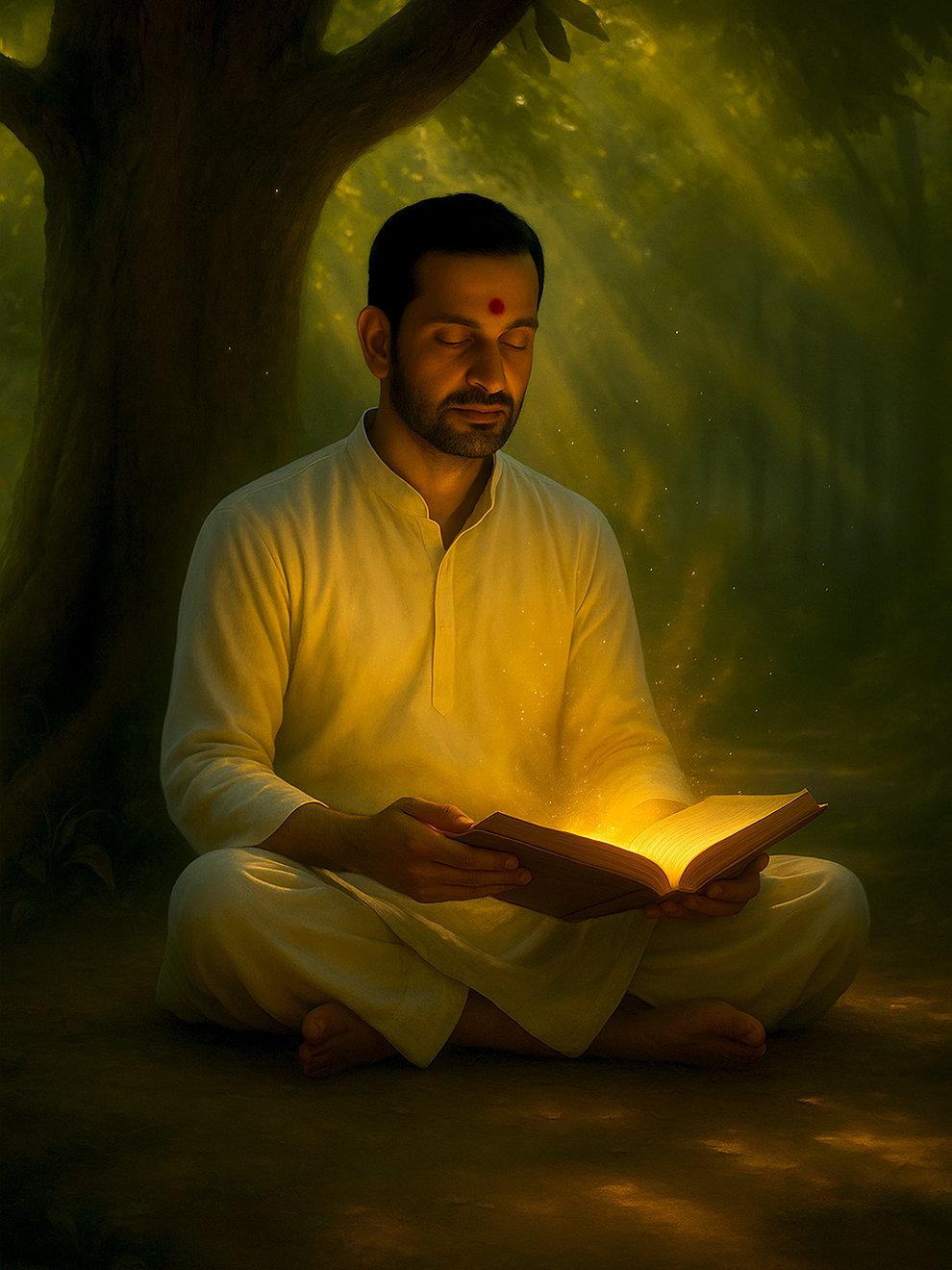
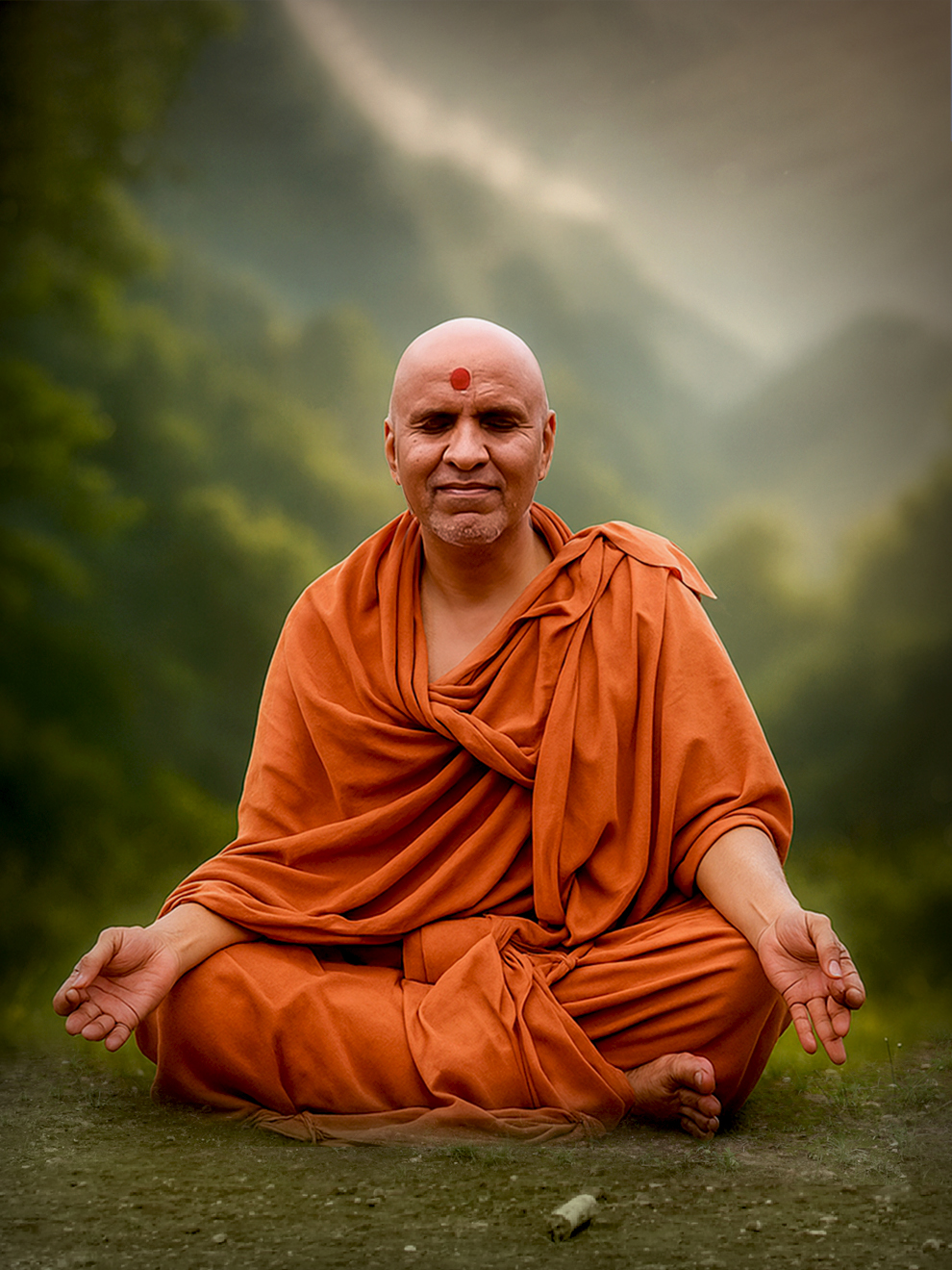
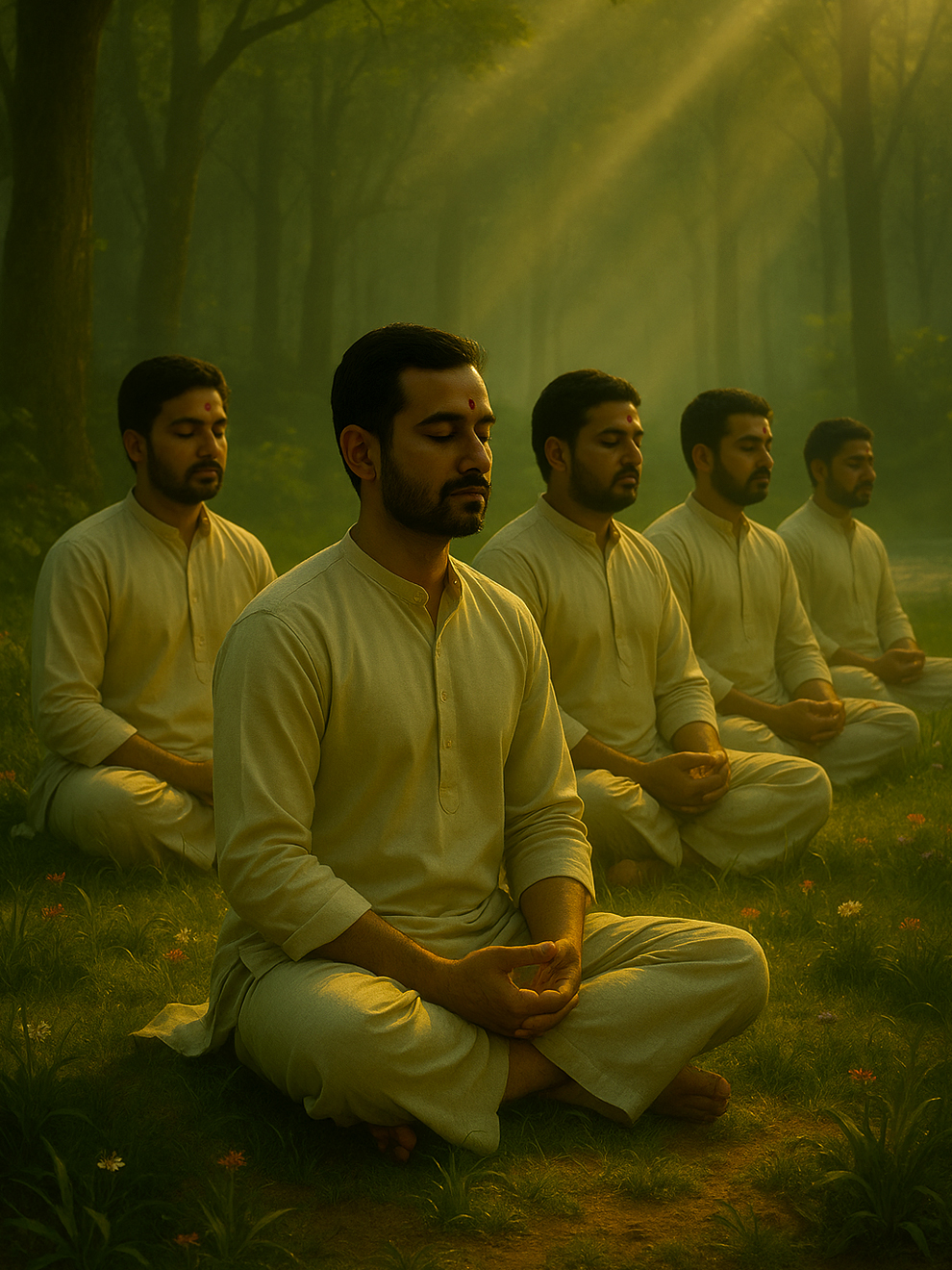
The state of sitting during meditation is crucial for a meditator to progress in their meditation practice. This state should be maintained such that one can sit for a long time in meditation without any movement or showing any signs of discomfort or pain.
Here are the various sitting postures (asanas) for meditation:
1. Padmasana (Lotus Pose):
- This is considered the best posture for meditation. Both feet are placed on opposite thighs, allowing the body and mind to become alert. It helps in quickly stabilizing during meditation.
2. Ardha Padmasana (Half Lotus Pose):
- If full Padmasana is not possible, one foot is placed on the opposite thigh while the other remains beneath, still allowing for a stable meditation posture.
3. Sukhasana (Easy Pose):
- When the body is too heavy or if Ardha Padmasana is not feasible, one can meditate in Sukhasana, which involves sitting cross-legged with a simple seat.
4. Khurshi (Chair Pose):
- If there is discomfort in the legs or unable to sit on the floor, one can meditate sitting on a chair. It's important not to lean back against the chair but to sit straight with the lower back supported by the chair.
These postures are essential for maintaining a stable meditation practice and choosing one depends on comfort and physical capability.
Here are some additional points about meditation postures:
Meditating while sitting on a warm cloth or a mat can enhance the benefits of meditation.
Even if sitting in Padmasana or Sukhasana, placing a cushion underneath can allow for longer meditation sessions without any discomfort.
It's very important to keep the spine straight during meditation. Even though discomfort may arise in other parts of the body, maintaining a straight and healthy posture is crucial. Therefore, you must sit straight and healthy in a tight manner.
It is advisable to use hand mudras during meditation. When the palms of the hands are turned towards the sky where right-hand palm is kept above left-hand palm, it is called a Dhyan mudra, and when the tips of the thumb and index finger are brought into contact with each other, and the rest of the fingers are left open towards the sky, it is called gyan mudra.
- Relax:
Mental stability is essential along with physical stability to meditate. It is necessary to relax to maintain mental stability in meditation, by moving all other thoughts aside.
Relaxation can be achieved easily through the practice of deep breathing and some pranayam exercises.
Deep Breathing:
Deep breathing at the beginning of meditation helps in relaxation. Focus your attention on the breath. Inhale and exhale slowly and deeply through the nostrils. Maintain a slow pace to calm the mind quickly and center it in meditation.
Anulom-Vilom Pranayam:
Begin by closing the right nostril with the right thumb and inhaling through the left nostril. Then, close the left nostril with the ring finger and exhale through the right nostril. Repeat this process, inhaling through the right nostril, closing it with the thumb, and exhaling through the left nostril. This completes one cycle of anulom-vilom pranayama. This practice calms the mind and promotes overall health.
Bhramari Pranayam:
Sit in Padmasana (Lotus Pose) and close the ears with the thumbs, eyes with the middle fingers, and place the ring fingers on the sides of the nose. Inhale deeply and exhale slowly, producing a humming sound like that of a bee without strain. This is Bhramari Pranayam. This practice enhances concentration in meditation and helps in avoiding distractions.
These pranayama practices can greatly enrich your meditation experience. Additionally, using various types of music can also be very beneficial for relaxation during meditation.
- Elimination:
When we sit for meditation, we should eliminate memory of and consciousness of the place, person, thing, thoughts of past-present and future activities. We should eliminate all these by knowledge and body consciousness. To become stealy in the form of Maharaj during meditation.
- Awareness of knowledge (who am I?):
After eliminating the memory of this world, one should recollect parbhav so as to say, stabilize in parbhav, regain the awareness of knowledge that I am Anadimukta, Maharaj has kept me certainly in Murti. One should relieve such conception.
- Tratak :
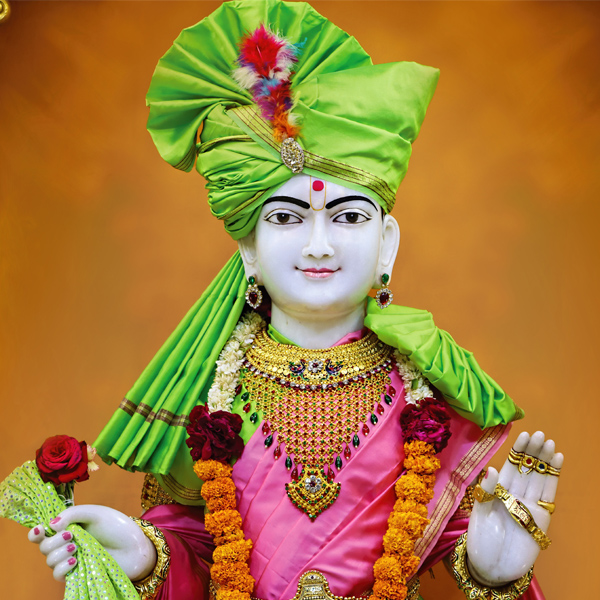
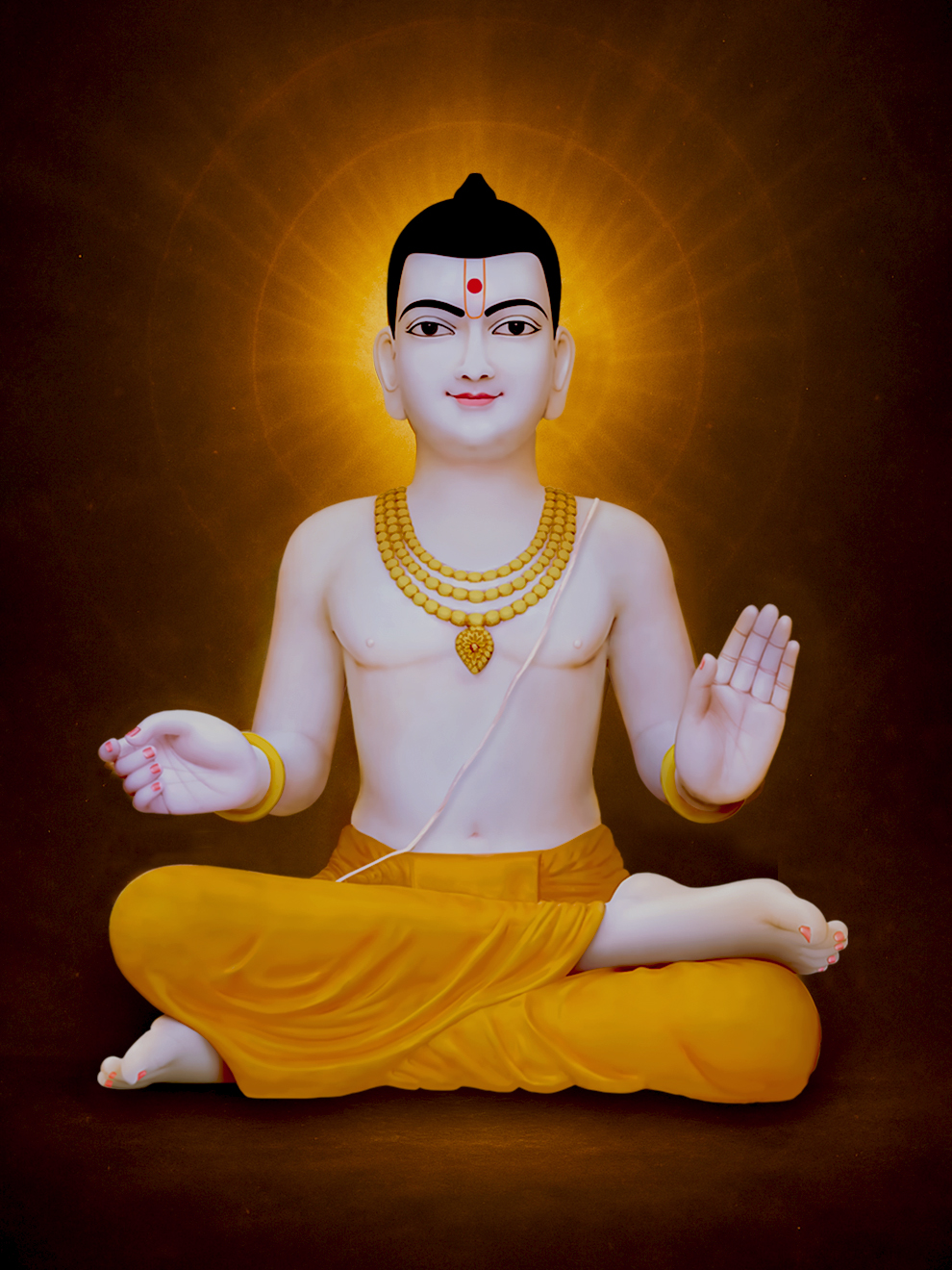
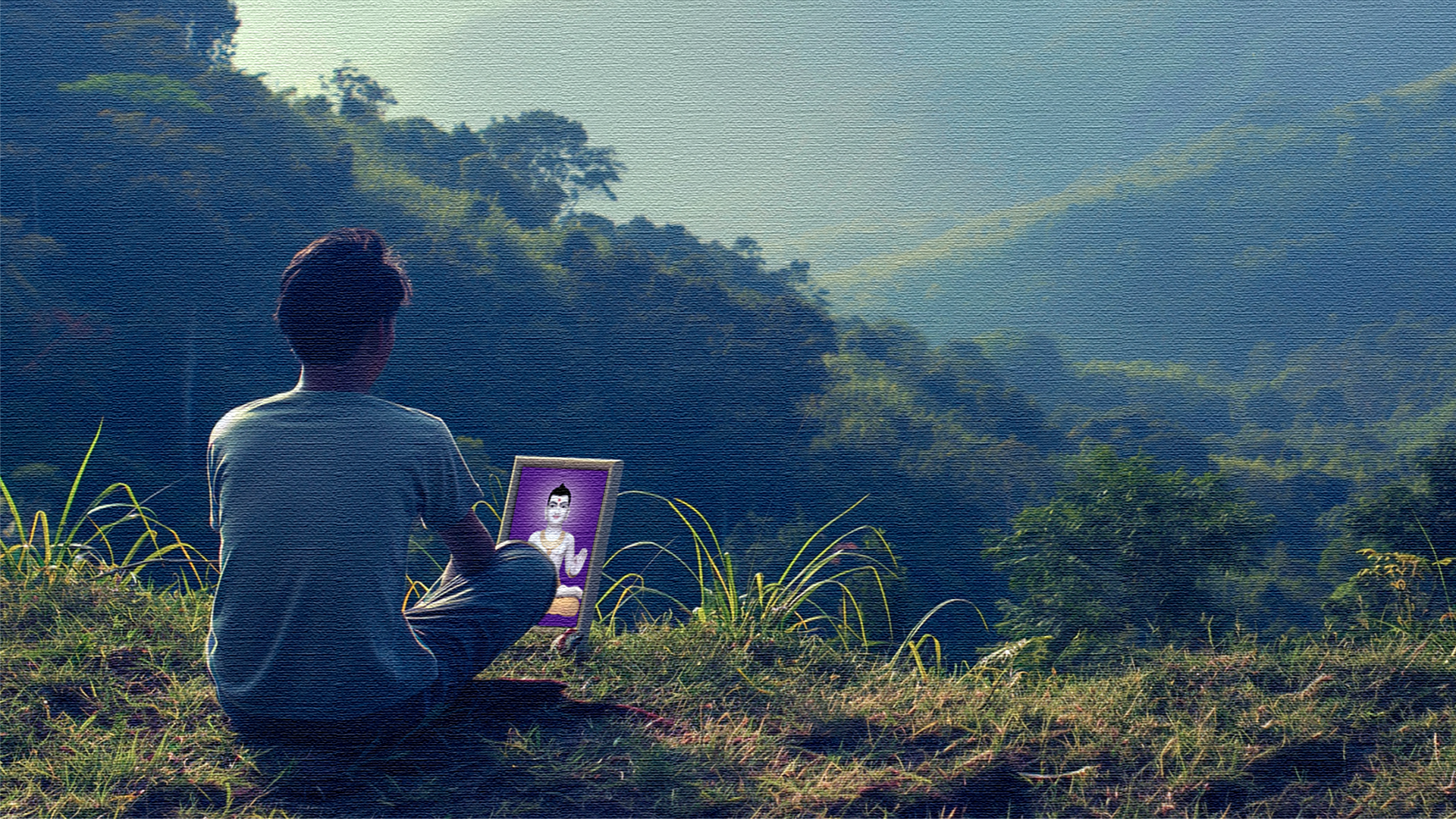
One should gaze at each and every organ of the Murti of avarbhav, we have affection for, and we are fascinated by and thereby solidify the entire Murti. We should study the Murti so much by practice, that as soon as we close our eyes, we can visualize the entire Murti at a time.
- Pratilom :
After solidifying the entire Murti by the practice of Tratak, we should study the entire Murti in pratilom position means head of the Mukta, in the head of Maharaj. Similarly, hand in hand, belly in belly, foot in foot. In this way, instead of visualizing Murti in front of one, one should study by practice to visualize the Murti in the position and direction as one is sitting (pratilom).
- Elimination of chain of thought:
We should stop the chain of thoughts occurring in the mind. We should eliminate their chain of thoughts and stabilize Murti. If we face difficulty in stopping the chain of thoughts occurring in the mind, we should chant Swaminarayan Mahamantra emanating from navel and thereby try to stop the chain of thought and stabilize in Murti during meditation. Despite these, if the chain of thoughts does not stop, we should pray to Maharaj and Motapurush for help.
- Accomplishment of status:
Visualizing Murti in pratilom position after stopping the chain of thoughts during meditation, one should stabilize in conception that Maharaj has kept me in Murti after transforming me into Anadimukta, now I am certainly dwelling in Murti, only Maharaj is here.
As more and more one stabilizes in this concept, one would accomplish that much status during meditation. When the concept that only Maharaj is here, is solidified and one stabilizes in it, complete status is accomplished in meditation.