










A. Aim of Meditation
The fundamental characteristic of the soul since eternal period is to enjoy the bliss of super soul (Lord Swaminarayan). Therefore, after connecting the soul that is eternally true (sat) with super soul (Lord Swaminarayan) who is eternally true (sat) so much so intimately that who meditate would enjoy the bliss of the form of super soul (Lord Swaminarayan) by means of meditation upto the level of each and every fluff of Murti. It should be the goal of the person who meditates to avail of the bliss of Murti only; He should not have any other desire or expectation of this world, expect the bliss of Murti.
B. What is Meditation?
Meditation is the excellent means for the soul, that is eternally true and separate from the body, to become one with the eternal God (Lord Swaminarayan) so much so intimately upto the minute level of fluff in fluff and thus become identical to the God in all respect.
Meditation is a way to deeply contemplate the form of the supreme soul (Murti of Lord Swaminarayan), enabling one to attain the state of purushottamroop (becoming identical to the form of Purushottam).
C. Why Meditation?
The jiv (embodied soul) considers itself to be the body, and this misconception is deeply rooted. This ignorance has solidified over countless births, leading to a false identification with the body. Acting under this delusion, the jiv seeks materialistic pleasures through the body, thus preventing the soul from experiencing the non-materialistic, divine bliss of God.
Since the jiv believes itself to be the body, it becomes attached to sensual pleasures and is trapped in the cycle of birth and death. The remedy for releasing the jiv from this cycle is the path of salvation (moksh). On this path, Lord Swaminarayan himself embodies salvation. When the soul attains the bliss of the Murti (form of Lord Swaminarayan), it is freed from the cycle of birth and death and becomes steady in the bliss of the Murti or the bliss of parbhav.
- The form of Lord Swaminarayan is the most divine among all divine entities. To experience His bliss, one must become homogeneous (sajati) with Him, meaning one should become identical to His form and attain the state of murtiroop. Only then can one fully avail of the bliss of the Murti (divine form of Lord Swaminarayan).
D. Where to do Meditation?
- The aspirant who desires the bliss of the Murti can meditate in any location, but the most preferable is the temple of God, especially in sacred places like naimisharanya kshetra, where the aura, blessings, and divinity of spiritual beings are profoundly felt. Additionally, peaceful and quiet environments such as one's home, serene gardens, or undisturbed riverbanks are also conducive for meditation and connecting with the divine form of Lord Swaminarayan.
E. When to do Meditation?
- After the body has got sufficient rest, at the time of early morning in a noiseless, peaceful and fresh atmosphere, one can meditate at such dawn period.
- When one feels inspired from within to connect with God through worship, indicating the prevalence of satvagun (mode of purity and goodness), meditation is recommended. However, when rajogun (mode of passion and restlessness) or tamogun (mode of inertia and ignorance) dominate within oneself, it is advised not to meditate during those times.
F. Who can Meditate?
The aspirant who is needy of the bliss of super soul (Lord Swaminarayan) and engaged in spiritual endeavor can meditate on the form of Lord Swaminarayan.
If we sit for meditation following the discipline of meditation, we may derive satisfaction from having completed the practice. However, true satisfaction, joy, and the bliss of achieving stability in meditation on the Murti (divine form) cannot be attained merely through discipline alone. Therefore, those who seek to experience bliss in meditation should first understand the transcendence of the goal form (supreme entity) and immerse themselves in the bliss of that divine form.
When one comprehends the transcendence of the supreme being, they are drawn in and become eager to experience the bliss of the supreme form. This understanding ignites rare enthusiasm, zeal, vigor, and a sincere desire within them. An aspirant engaged in meditation with such intense longing can truly meditate and make progress on the path towards attaining the state worthy of experiencing the bliss of the Murti.
Upon understanding Maharaj's true glory everything else except for God, becomes extremely insignificant. This ignites an internal desire to attain the bliss of God.
G. Type of Meditation?
1. Sang Meditation:
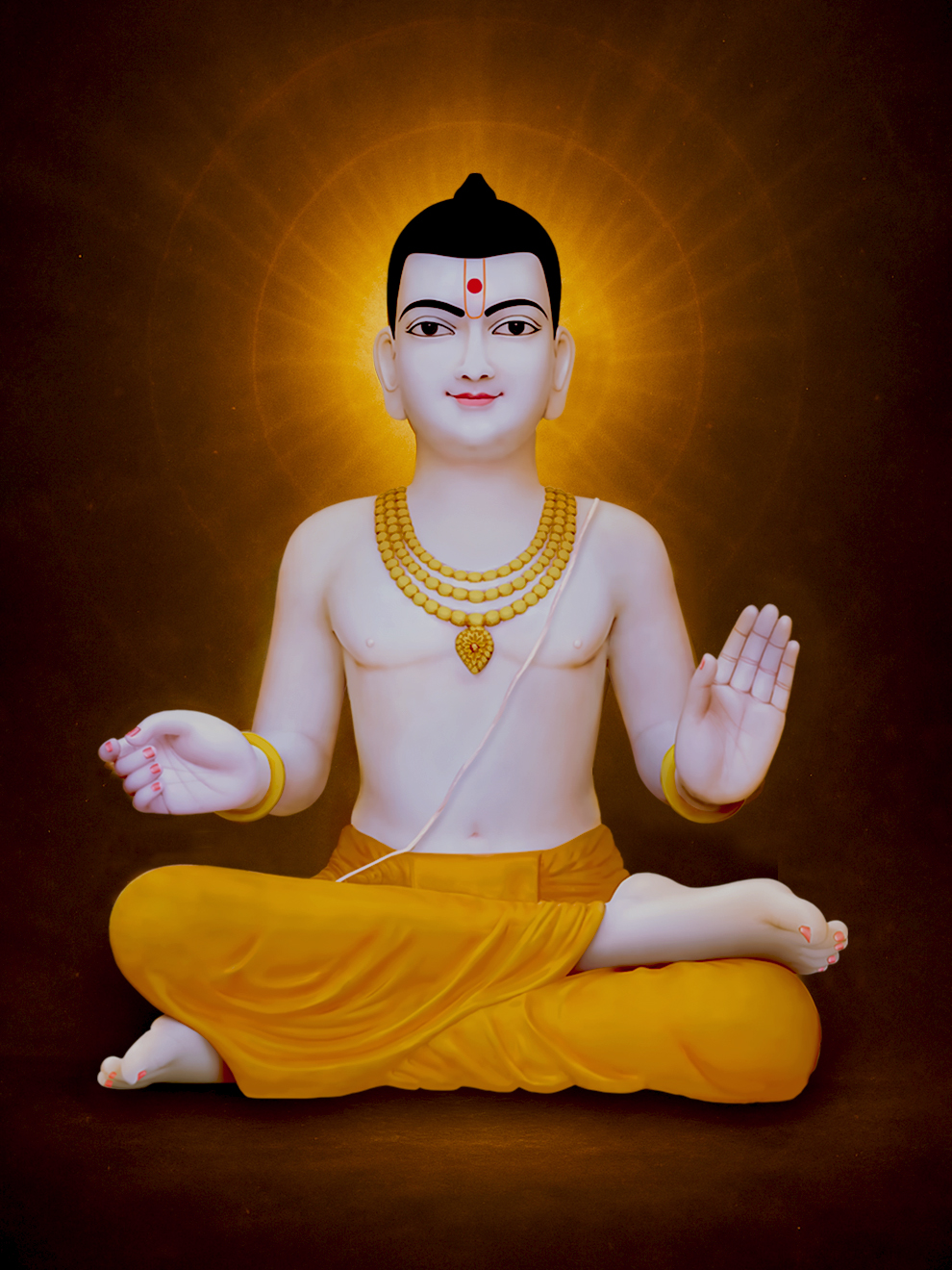
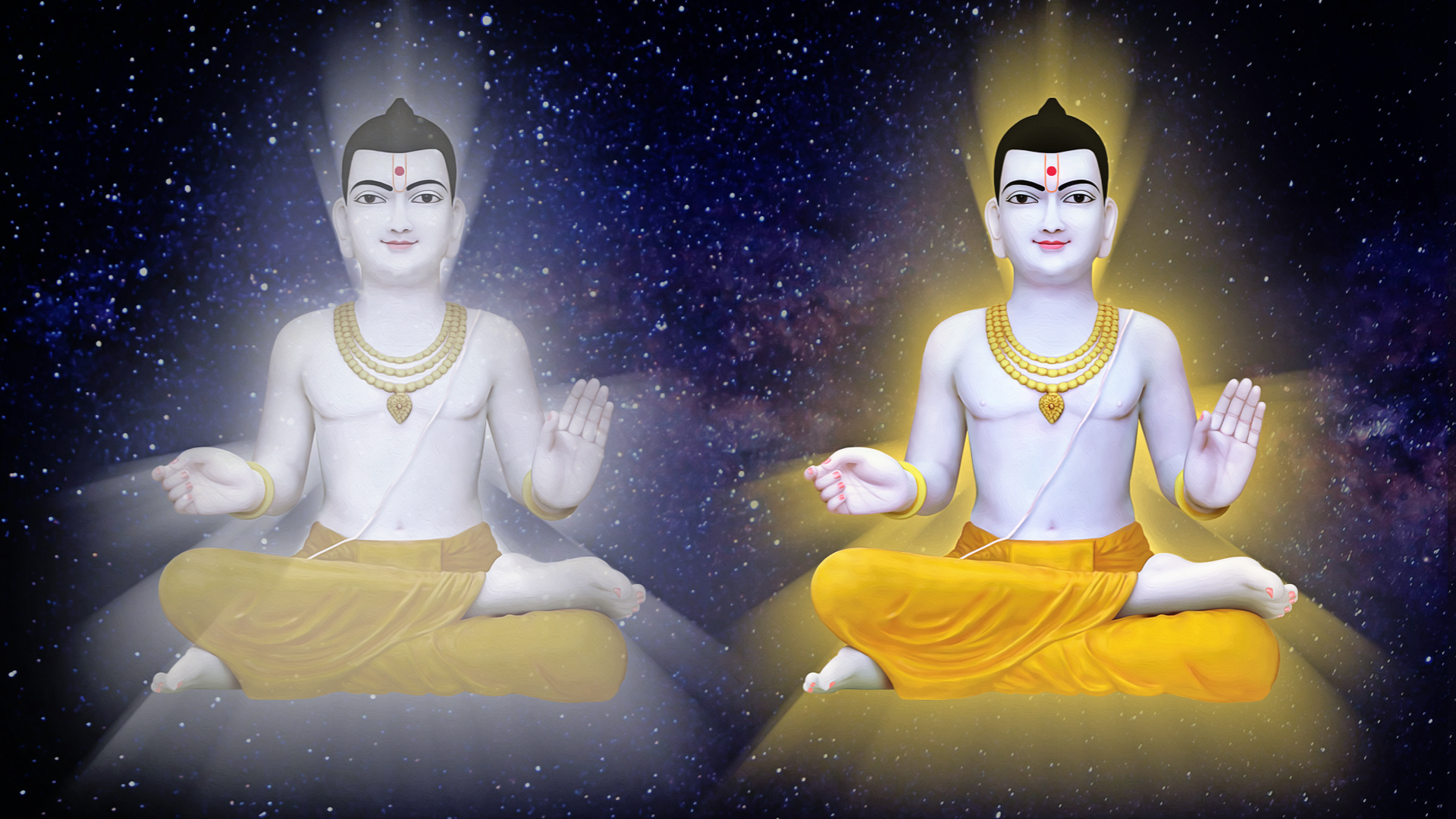
To meditate on sang Murti, without wearing any attire and ornaments, visualizing Murti as luminary, is called sang meditation. Out of four types of meditation, sang meditation is the best.
2. Upang Meditation:
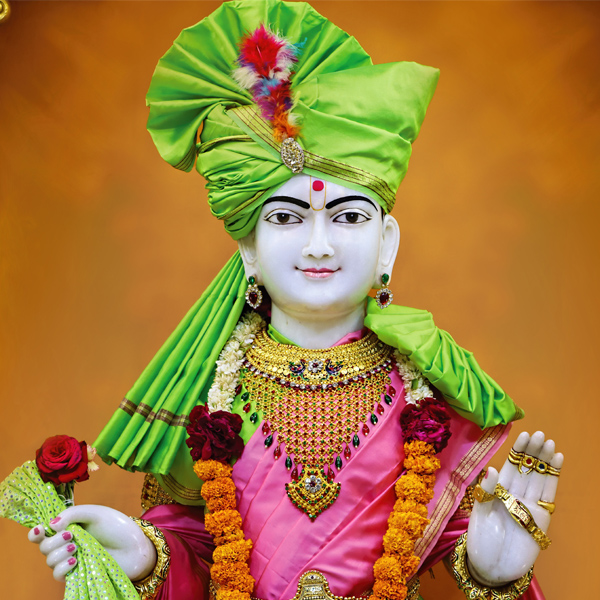
Lord Swaminarayan has worn divine attire and ornaments with this perception if we meditate on the Murti wearing divine attire-ornaments is called upang meditation.
3. Salil Meditation:
To meditate, remembering the role play of Lord Swaminarayan to make sants-devotees blissful is called salil meditation.
4. Saparshad Meditation:
Meditate on Lord Swaminarayan along with His mukto, is called saparshad meditation. If one cannot meditate upon Murti of Lord Swaminarayan alone for connection with Him, and we need the support and power of mukto we should visualize, so as to say, meditate on Lord Swaminarayan along with mukto. This is called saparshad meditation.
Thus, there are four types of meditation. However, those who are engaged in the other three types of meditation should also gradually aim to switch over to sang meditation because to attain realistic bliss of Murti in all respects, this type of meditation is a must.
H. Methods of Meditation
There are two methods of meditation:
- Anulom Meditation
Considering one’s own soul brahmroop, meditate on the divine luminary Murti of Shriji Maharaj, visualizing Murti of Shriji Maharaj before one’s eyes is called anulom meditation. By means of anulom meditation, we attain the status of Param ekantik mukta. By attainment of this status, one cannot enjoy the bliss of Murti in His entirety.
2. Pratilom Meditation:
Pratilom meditation involves considering one's own soul as purushottamroop and meditating on the divine luminary Murti of Shriji Maharaj, visualizing the Murti in the same position or direction as oneself while sitting. It is regarded as the ultimate form of meditation. Shriji Maharaj bestows immense grace by transforming our soul, separate from the body, into purushottamroop — divine and with a definite form identical to Himself. After this transformation, our soul resides in the bliss of His Murti, and its separate identity dissolves. It merges completely with the Murti (murtiroop).
In Pratilom meditation, one visualizes each part of their body being absorbed into the corresponding part of Purushottam's body—head in head, hand in hand, leg in leg, and so on. By visualizing the Murti in the same place and position as oneself, one aims to achieve absorption to the minutest level (rom rom) with the Murti, ultimately becoming one with it. Despite this union, the relationship of master-servant and benefactor-beneficiary always remains. Pratilom meditation is the method practiced in Karan satsang.
- Discipline of Meditation :
Aspirants determined to experience the bliss of the Murti through meditation should adhere to the following discipline during their practice. By following this discipline, one will surely stabilize in meditation and attain the bliss of the Murti.
- To avail the bliss of the Murti through meditation, aspirants should adhere to the following discipline:
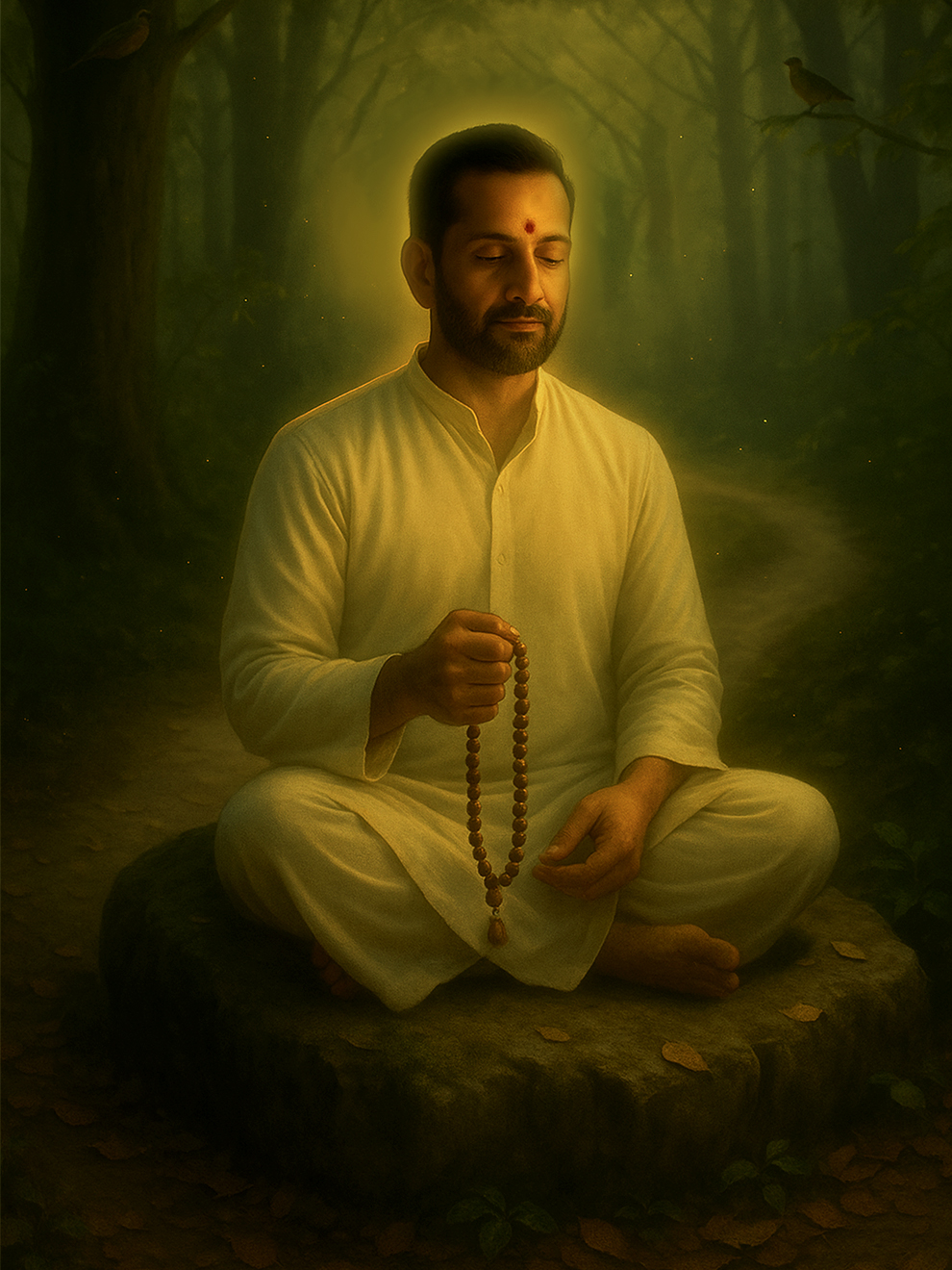
Posture: Sit upright in the swastiksaan posture. Hands should be in the meditation posture (hands in the lap, overlapping, with palms facing up). Ensure the body remains steady without any movement.
Selection of Murti: Choose a sang Murti of Shriji Maharaj (a Murti without attire or ornaments) that is affectionate, attractive, and blissful during darshan. Regular meditation should focus on this Murti, and it is not advisable to change the Murti frequently.
Tratak: Perform tratak by staring at the sang Murti without blinking, maintaining complete concentration.
Visualization: After tratak, close your eyes and visualize the Murti in the pratilom position. Initially, visualize each organ of the Murti and then the entire Murti.
Pratilom Meditation: The fundamental principle of Karan satsang is to practice pratilom meditation. If initially challenging, start by visualizing the Murti before your eyes and gradually switch to pratilom meditation.
Attitude: Meditate with interest, awareness, intense desire, and resolute determination. Practice meditation daily.
Managing Thoughts: Do not be swayed by thoughts. Use awareness and discretion to avert them. If thoughts persist, chant the Swaminarayan Mahamantra emanating from the navel.
Prayer and Support: If bliss or stability in meditation is elusive, pray to Satpurush. Supplement efforts with certain verses of kirtans that aid in meditation.
Alertness: Avoid sleep, laziness, and dozing during meditation. Maintain keen alertness.
Persistence and Faith: Keep faith in your efforts to achieve the goal of meditation. Continue practicing even if stability or bliss is not immediately experienced.
Duration: Meditate daily for at least half an hour.
By following this discipline, one can stabilize in meditation and attain the bliss of the Murti.
J. Benefits of Meditation:
Physical benefits of Meditation:
- Body’s health and homeostasis (balance) is maintained:
The 21st century is an era where each individual desires thing promptly. The effect of this speed-oriented era is also observed in the agriculture industry. Various chemicals, fertilizers, and seeds are used to grow grains, fruits, and vegetables with immense speed. This results in the disturbance of the body’s homeostasis. Furthermore, current jobs and businesses do not involve any physical activity, which is not ideal for the body. As a remedy for all these problems, physicians often recommend practicing yoga, exercise, and pranayam (deep breathing exercises). These practices help maintain bodily homeostasis. Meditation is indirectly incorporated in yoga and pranayama. Compared to other yoga postures, meditation holds greater significance. Among the many internal benefits of meditation, the most important is that it helps maintain bodily health and homeostasis.
- Eliminates Impatience
Temperament is a chief cause of frustration, disappointment, and misery experienced in our interpersonal and personal lives. Many temperaments are common, but they often yield uncommon outcomes. One such temperament is impatience. Impatience influences our interpersonal lives by leading us to disrespect others, disregard their ideas, and act childishly. It also affects our personal lives, preventing us from restraining our senses and sitting steadily during meditation, worship, and assemblies. Additionally, impatience hinders our ability to concentrate fully on any subject. Among various solutions, meditation is the most effective way to eliminate impatience. Meditation is the ultimate solution because it provides immediate results.
- Always Remain Gleeful
Everyone experiences two types of thoughts constantly occurring in their minds: what has been done and what is to be done. These thoughts are the root causes of happiness and misery in one’s life. Feelings of hatred and envy arise from memories of improper things someone has said or done to us. Worry, fear, and despair stem from thoughts about potential future situations and circumstances. Meditation is the sole method for forgetting past and future thoughts and becoming completely engrossed in the present. It helps us focus solely on Maharaj’s Murti, keeping us unaffected by worry and fear even after meditation. Thus, meditation is the quickest and most permanent way to attain a gleeful state of mind.
- Efficiency and Enthusiasm Increase
People employ various methods to increase the body’s efficiency, such as taking pills or performing exercises suggested by physicians. However, it is important to note that efficiency largely depends on the soul. The more cheerful and powerful the soul is, the greater the efficiency. Meditation relieves the entrapped soul from the darkness of ignorance through the enlightenment of knowledge, making it more powerful. This immediately enhances one’s efficiency.
Moreover, enthusiasm during seva (selfless service) or other activities varies based on the stability of the mind. A stable mindset in any situation or circumstance can be easily attained through meditation. Thus, meditation significantly increases enthusiasm.
- Internal Abilities Develop
Bhagwan Swaminarayan stated in the 25th Vachanamrut of Gadhada First Chapters, “If twenty kosh (leather buckets used to draw water from a well and direct it into small streams for cultivating farms) are engaged to draw water from a well and the flow of water is directed in different directions, there would not be much force in the current. However, if the flow from each kosh is combined, the resultant flow would be as powerful as a river and cannot be obstructed by an obstacle.”
Similarly, our attention is widely dispersed across various activities throughout the day, which does not provide nourishment to develop internal abilities. Meditation is a discipline where our entire attention is focused solely on Maharaj, providing unlimited nourishment to develop internal abilities. This greatly enhances our internal personality. Qualities such as concentration, memory, thinking power, grasping power, quick decision-making ability, spirit for adventure, bravery, and resoluteness are all cultivated. These qualities aid in both worldly and spiritual activities and yield fruitful results.
Spiritual benefits of Meditation :
- Become free from agony:
A wasp which is infatuated by the smell of a lotus desires to remain on top of the flower for long periods of time due to its attraction to the sweet smell. However, at dusk petals the flower is closed, the same lotus giving pleasant smell becomes the cause of agony for the wasp. Worldly pleasures are just like this lotus. They always come attached with great distress. That is why great sants have said, “It is not possible for mundane pleasures to come without distress.”
Due to the lack of enlightenment of knowledge, mankind blindly runs after mundane pleasures and comforts. However, as one acquires increasing levels of mundane pleasures, their agony, restlessness, insomnia, mental stress and other distresses also tend to increase.
Hence the one and only remedy to end these worldly distresses is to enter into the world of spiritualism. An excellent, panacea like means of entering into the world of spiritualism is meditation. Practicing meditation eliminates all mundane agony from our lives and it will help us reach the pinnacle of spirituality.
- Eliminate lust-like vices:
Sadguru Muktanand swami preaches us to meditate upon the most divine Murti of Shriji Maharaj to put an end to all forms of misery:
“Dhyan dhar dhyan dhar Dharmana putra nu,
Je thaki sarva santap nase.”
By means of practising pratilom meditation, Maharaj comes and sits in our spot. Through this close proximity with Maharaj all our vices flee away without even stopping to say goodbye. Hence, practicing regular meditation makes it possible to eliminate vices like lust-anger etc.
“Me sunyo prabhu tera dhyan binu,
Talat nahi reepu batla de.”
As meditation is practiced, our inner enemies which have ruled over our soul for innumerable years must relinquish rule over our soul and vacate this home. Shrji Maharaj initiated Verabhai, who was chief of thieves, as a sant and named him Parmanand swami. On the occasion of the Kankariya Chorasi, a Lolangar mendicant came to hurt Shriji Maharaj and at that time Parmanand swami took a sword in his hand to fight with the mendicant. During the battle, Parmanand swami’s right ear got cut off. Since a part of his face became distorted, he had to leave his identity as a sant and he had to become a householder again. Upon realizing that it was his uncontrolled anger which made him lose his identity as a sant, he firmly decided that ‘I must overcome my anger forever.’ With this firm determination, Verabhai started meditating in solitude to avert his anger.
One day when Verabhai was meditating, dark figures of his size started coming out of his body. So, Verabhai asked, “Who are you all? Where were you living?” At that time, one of the figures replied, “I am lust”, another one replied, “I am anger”. Like such, all the figures started to say one by one, “We all used to live within your body but now you do meditation of Shriji Maharaj, hence Maharaj has graced your body. So, we are all forced to leave this home.” Thus, our inner enemies are eliminated through practicing meditation.
- Develop a personal relationship with Murti:
Through regular meditation, love and affection towards Maharaj progressively increases. When we spend a considerable amount of time with someone, bondage of love and affection is created, and a personal relationship develops. Henceforth, we open up to them, if we face any difficulty, we remember them immediately and ask for his help. We continuously feel an eagerness to meet him and to talk with him. Likewise, by means of meditation we develop a personal relationship with Shriji Maharaj. Our eagerness to talk to Maharaj also increases. Upon the occurrence of any adverse circumstances, we would never feel the need to explore any other aids due to our firm reliance solely on Shriji Maharaj.
- Become worthy of the bliss of Murti:
In the 229th sermon of the 1st part of Bapashree ni vato, Jivanpran Bapashree has said, “If we become worthy everything else would follow. Just like the milk of a lioness can only stay in a golden utensil, Shriji Maharaj can only reside in an individual who becomes as worthy, pure and pious as Shriji Maharaj. So, if one endeavours to meditate upon Murti in pratilom form, Shriji Maharaj definitely makes one worthy of His bliss.”
As we endeavor to meditate, Maharaj and Motapurush become pleased on us, and they bestow worthiness upon us for the status of an Anadimukta. This is because at this time Maharaj and Motapurush have a firm desire to grant infinite souls the status of an Anadimukta and to bestow upon them the divine bliss of Murti. Hence, experienced sants advise us to practice meditation by saying:
“Sthiti te karvane karane, karo muj swaroop nu dhyan re,
Kahe chhe vhalo kari krupa re…
Dhyan karvathi vadhe patrata ne, vadhe sukh samarthi prakash re…
Kahe chhe vhalo kari krupa re…
Nava sukho nitya avshe, dhyan karshe tene saday re,
Kahe chhe vhalo kari krupa re…”
“Nityaniyam purvak abhyas thi, dhyane rakho pyar,
Dasanudas kahe Shree Hari, sukhda deshe apar…”
- Mundane pleasures of this world or sensual pleasures would not allure us:
Sadguru Paramanand swami has said in the stanzas of ‘vandu’; “Vhala e rasna chakhanhar chhas te nav pive re lol…” This means one who has tasted the divine bliss of Maharaj’s Murti would never like to enjoy worldly or sensual pleasures which are like buttermilk. These mundane pleasures and sensual pleasures begin to appear insignificant, transient and worthless and one does not experience even the slightest fondness towards them. Thus, one only experience eagerness to rejoice the bliss of Maharaj’s Murti.
K. Hurdles in Meditation
There are four hurdles which impede meditation.
- Lay (sleep): Sometimes, we are overpowered by sleep or feel laziness during meditation.
- Kashay (jealousy-spite): Sometimes, negative thoughts of jealousy, spite etc. arise in the mind during meditation.
- Vikshep (thoughts): During meditation thoughts of work done or to be done occur in the mind.
- Rasaswad (attachment to sensual pleasure): Desire to enjoy pleasure of taste of food or other sensual pleasure is felt at the conscience (antahkaran) during meditation.
L. Whom should we meditate?
• The form of Lord Swaminarayan is the only one form that is worth discerning (gney), that is our goal (dhyey) and that is worth worshipping (upasy).
• Gney means the form worth discerning.
- Dhyey means the form worthy of meditation by us.
- Upasya means the form worthy of upasana.
- Such a form can only be one which is not created by anybody, and such eternal (sanatan) form is only one, Lord Swaminarayan.
- We should meditate on eternal form, that is our goal, Lord Swaminarayan.